













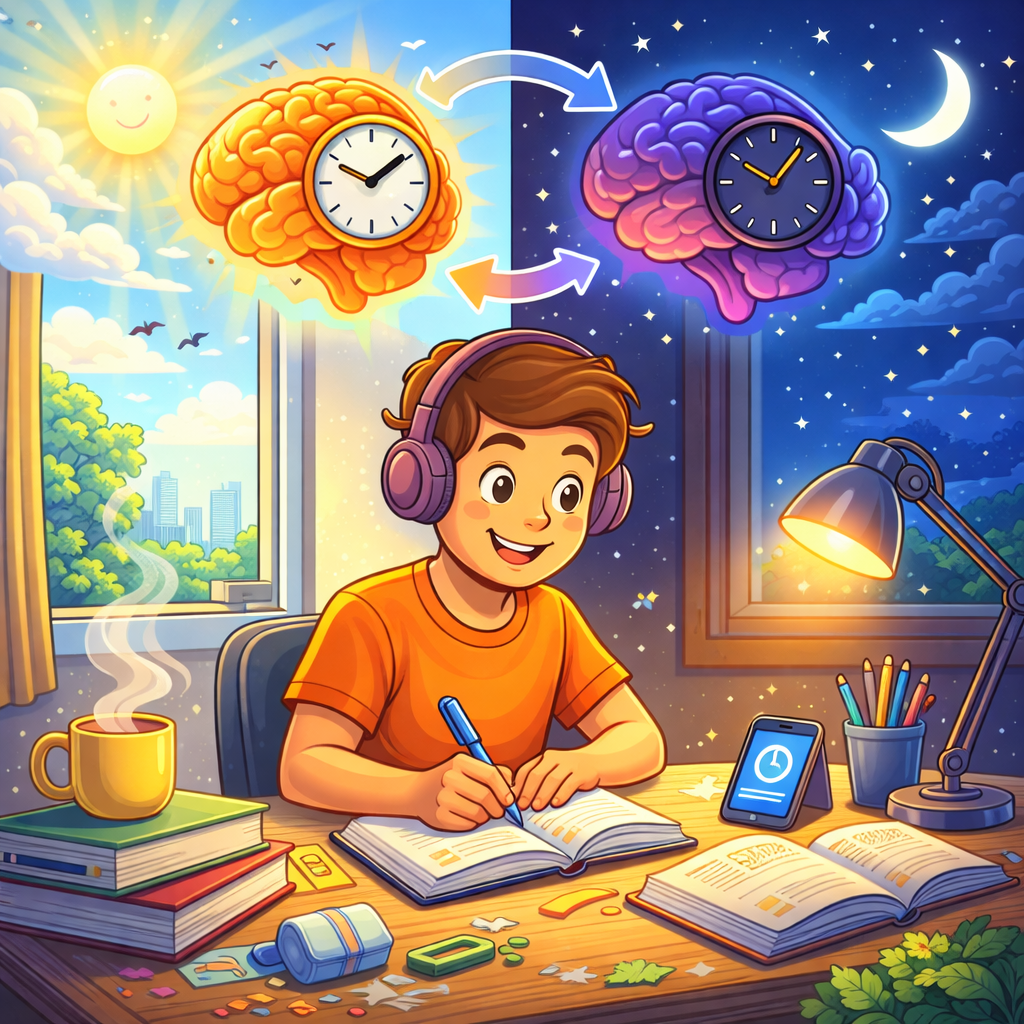
Here is something most students get wrong: they think studying more hours is the key to better grades. Wrong. It is not about how long you study — it is about when you study. Your brain is not the same at 7 in the morning and at 11 at night. It changes. It peaks. It crashes. Understanding your brain's natural rhythm can completely transform how you learn.
Scientists call this rhythm the circadian cycle. It is your body's internal clock. It controls when you feel alert, when you feel tired, and when your memory works best. A 2023 study from the University of Michigan found that students who matched their study schedule to their natural energy peaks scored up to 20% higher on tests. That is not a small difference. That is one full letter grade.
So, when are those peak hours? Research points to two golden windows during the day:
Morning window (9:00 AM – 12:00 PM): Your brain is fresh. Analytical thinking and problem-solving are at their strongest. Perfect for math, science, and difficult reading.Late morning to early afternoon (10:00 AM – 2:00 PM): Focus and concentration reach their highest point. Great for writing essays or learning new grammar rules.Late afternoon (4:00 PM – 6:00 PM): Your long-term memory starts to activate. Excellent for reviewing vocabulary or repeating important information.Early evening (6:00 PM – 8:00 PM): A solid second peak for many students. Good for creative tasks and language practice.
Now, here is the part nobody tells you about nighttime studying. Many students believe studying late at night is effective because it is quiet. Partly true. The quiet helps. But your brain after 10 PM is significantly less efficient at storing new information. You might read the same paragraph five times and remember nothing. Your tired brain is working hard — but producing poor results. Late-night cramming before an exam? Studies show it hurts more than it helps.
Want a practical study plan? Follow these steps:
Wake up and eat a small breakfast first. Your brain needs fuel — glucose from food improves concentration immediately.Start your hardest subject between 9:00 AM and 11:00 AM. This is when your analytical brain is most powerful.Take a 10-minute break every 45 minutes. Short breaks reset your focus and help your memory consolidate what you learned.Review your notes in the late afternoon, around 4:00–5:00 PM. Repetition during this window moves information into long-term memory more effectively.Stop serious studying by 9:00 PM. Light review is fine, but new material after this time rarely sticks.
Let me give you a real example. Imagine two students, Sara and Tom. Sara studies English vocabulary every night at midnight for two hours. Tom studies the same vocabulary at 10:00 AM for just one hour. After one week, Tom remembers significantly more words. Same effort. Different timing. Sara is exhausted and frustrated. Tom feels confident and ready. The difference is not talent — it is timing.
There is also a common misconception worth addressing. Many students think early birds — people who wake up very early — always perform better. Not exactly. Scientists now recognize two main types of people: morning types and evening types. If you are a natural evening type, your peak focus might arrive later, around 11:00 AM instead of 8:00 AM. The key is to identify your personal rhythm, not copy someone else's schedule. Try studying at different hours for one week and track your results honestly.
Your study environment also plays a vital role during peak hours. Even if you study at the right time, a noisy room or a bright screen at night can destroy your concentration. During morning study sessions, open a window — natural light boosts alertness and mood. During afternoon reviews, find a quiet, comfortable space. Small changes in environment make a remarkable difference in how much you actually retain.
Here is the bottom line. Your brain is a powerful tool — but it has a schedule. Work with it, not against it. Study difficult subjects in the morning. Review in the afternoon. Rest at night. It sounds simple. It is simple. But most students never do it. Start tomorrow. Pick one subject. Move it to your morning window. See what happens. The results will surprise you.